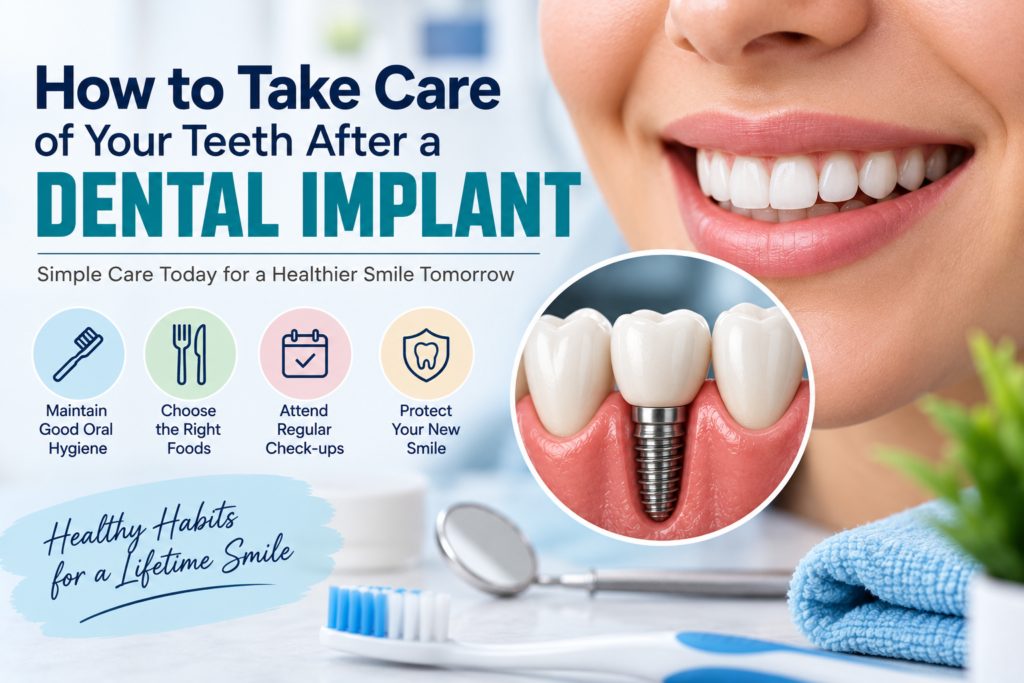
How to Take Care of Your Teeth After a Dental Implant: A Complete Guide
D-ARCH DENTAL CLINIC · PATIENT GUIDE How to Take Care of Your Teeth After a Dental Implant Dental implants are a popular way to replace missing teeth and restore both the appearance and function of your smile. Unlike removable dentures, a dental implant is placed into the jawbone and eventually supports a dental crown, bridge, or denture. However, getting a dental implant is only one part of the treatment. Proper care after the procedure plays an important role in healing and maintaining your new smile for the long term. If you have recently undergone dental implant treatment or are planning to get one, understanding how to take care of your teeth after a dental implant can help you protect the implant, keep your gums healthy, and reduce the risk of complications. Your dentist will provide personalized instructions based on your procedure, but some general habits can support a healthy recovery. Why Is Dental Implant Aftercare Important? After implant placement, the surrounding gum tissue and jawbone need time to heal. The implant also needs to integrate with the surrounding bone through a natural process known as osseointegration. This healing process is essential because the bone gradually forms around the implant and helps provide stability. Depending on the individual case, the healing period can take several months. During this period, taking care of your mouth is particularly important. Keeping the surgical area clean, following your dentist’s instructions, eating appropriately, avoiding tobacco, and attending follow-up appointments can all contribute to proper healing. Follow Your Dentist’s Instructions Carefully The first and most important step after dental implant surgery is to follow the instructions provided by your dentist or oral surgeon. Every implant procedure is different. The recommended diet, cleaning method, medication, and activity restrictions may depend on factors such as the number of implants placed, whether bone grafting was performed, and your overall oral health. Do not change medications or stop prescribed treatment without discussing it with your dental professional. If your dentist has given you specific instructions that differ from general online advice, their instructions should take priority because they are based on your individual treatment. Be Careful With Food During the Initial Healing Period Your mouth may feel tender after implant surgery, so choosing appropriate foods can make the early recovery period more comfortable. Dentists commonly recommend soft foods during the initial healing period, especially when chewing near the surgical site could cause discomfort or put unnecessary pressure on the area. The American Dental Association provides oral health guidance for patients. Foods such as yogurt, soft rice, mashed vegetables, soups that are not too hot, scrambled eggs, smoothies, and other easy-to-chew foods can be convenient options. As your mouth heals, your dentist can tell you when it is appropriate to gradually return to your normal diet. Avoid chewing hard, crunchy, or sticky foods directly around the implant site until your dentist says it is safe. You should also be careful with very hot food and drinks immediately after surgery, particularly while your mouth is still numb. Maintain Good Oral Hygiene Keeping your mouth clean is one of the most important parts of dental implant aftercare. Bacteria and plaque can accumulate around teeth and gums, so maintaining good oral hygiene helps support the health of the tissues surrounding your implant. However, you should not aggressively brush or disturb the surgical site immediately after the procedure. Your dentist will explain when and how to clean the area. As healing progresses, regular brushing and cleaning between the teeth become important parts of your long-term routine. For general oral health, the American Dental Association’s home-care guidance recommends brushing twice a day with fluoride toothpaste and cleaning between the teeth daily. Depending on your implant and restoration, your dentist may recommend specific brushes, interdental brushes, floss, or a water flosser to help clean difficult-to-reach areas. Do not use high pressure or aggressive cleaning around a healing implant unless your dental professional has specifically recommended it. Keep the Implant Area Free From Food Debris Food particles can become trapped around dental implants, particularly during the early stages of healing. If cleaning the surgical area is uncomfortable, follow your dentist’s instructions regarding gentle rinsing and cleaning. Some dental implant aftercare instructions recommend gentle rinsing with warm salt water or a recommended mouthwash after the first day, depending on the surgical procedure. Cambridge University Hospitals provides patient guidance on dental implant care and recovery. Avoid vigorous rinsing immediately after surgery unless your dentist specifically instructs you to do so, as excessive disturbance can interfere with the healing area. Avoid Smoking After Dental Implant Surgery If you smoke, it is especially important to discuss this with your dentist before and after implant treatment. Tobacco use can interfere with healing and is associated with poorer outcomes for dental implants. The American Dental Association provides oral health information, and NHS patient guidance also identifies smoking as a risk factor for implant complications. Avoiding tobacco during the healing period is an important step in protecting your dental implant. Your dentist can provide advice and support if you want to stop smoking. Avoid Putting Unnecessary Pressure on the Implant Although a dental implant is designed to provide a strong foundation for a replacement tooth, it still needs time to integrate with the jawbone. Avoid testing the implant by repeatedly touching it with your tongue, fingers, or other objects. You should also avoid chewing very hard foods on the healing side until your dentist gives you permission to do so. Following these precautions can help prevent unnecessary stress on the surgical area while the tissues are recovering. Take Care of Your Remaining Natural Teeth A dental implant replaces a missing tooth, but it does not mean that the rest of your mouth no longer needs regular dental care. Your natural teeth can still develop cavities, gum disease, and other oral health problems. Maintaining good brushing and interdental cleaning habits is therefore essential. Healthy gums and clean surrounding teeth provide a better environment for maintaining your […]